Your contracting experience deserves a place in cultural heritage projects… but entry has its own rules
Training & Advisory Pathway: Qualifying Contractors to Enter Cultural Heritage Projects
An intensive 30-hour professional program that moves your leadership team from "we're thinking about this market" to a realistic 90-day entry plan: registration and qualification with the relevant bodies, a specialized capability profile, an organized heritage unit, and genuine readiness to study tenders and prepare technical proposals.
- 5 days
- 30 training hours
- Group or private for your company
- Delivered in Arabic
- intensive days
- 5intensive days
- training hours
- 30training hours
- practical deliverables
- 5practical deliverables
- day action plan
- 90day action plan
The challenge
You have the people, equipment, and track record… so why does the heritage market feel closed?
- You're not sure which bodies issue heritage projects, or how supplier registration, prequalification, contractor classification, and bidding on a specific tender differ.
- Your company profile was written for general contracting and doesn't surface the experience that transfers to restoration work.
- There's no unit or team responsible for heritage inside the company, and no clear procedures for approving materials and methods.
- Tenders arrive, but you have no way to decide: do we bid or not — and what are the risks, partners, and costs?
What you'll walk away with
You won't just leave with more information… you'll leave with working files
- 1Readiness gap reportA clear picture of what your company has today and what it lacks to enter heritage projects, prioritized.
- 2Registration & qualification checklistA matrix of bodies, documents, gaps, owner, and follow-up date, based on the requirements published at the time of applying.
- 3Heritage Capability Profile structureThe index of a heritage-specific profile, an experience matrix, and a plan to gather the supporting evidence.
- 4Heritage unit blueprintA proposed organizational and operating structure for the heritage unit, with a setup plan, hiring needs, and partnerships.
- 5Bid / No-Bid model & 90-day planA practical tool for deciding whether to bid, plus a 90-day plan the company starts the moment the program ends.
Curriculum
How do you build your company's readiness in 5 days?
Each day is 6 hours combining instruction and a workshop, and ends with a practical product specific to your company. The program can run for a group of companies or be fully tailored to one company.
- 5 core sections
- 25 topics & activities
- 30 training hours
- 5 days
Understand the core difference between conventional contracting and conservation work, and pinpoint what your company can deliver directly versus what needs a specialist partner.
- Conventional contracting vs. conservation, restoration, and rehabilitation
- Project types: historic buildings, archaeological sites, museums and collections, studies and documentation, operation and maintenance
- Which specialties the company can deliver directly and which require a specialist partner
- Current capability analysis: classification, people, track record, quality, safety, equipment, financial position
- Workshop: company readiness assessment model, gaps, and prioritiesWorkshop
Today's practical product: An initial opportunity map and company readiness analysis
Map the potential bodies and their digital channels, understand how the different paths differ, and leave with a tracking matrix for each body.
- Mapping potential bodies: Ministry of Culture, Heritage Commission, and project owners, by each body's remit
- Supplier registration vs. prequalification vs. contractor classification vs. bidding on a specific tender
- Reviewing relevant digital channels, including the Etimad platform where applicable, and officially announced supplier/qualification portals
- Preparing the legal, technical, and financial document file per each body's latest instructions
- Hands-on: registration status matrix — owner, official link, required document, follow-up dateHands-on
Today's practical product: A registration, documents, and gaps matrix
Build your company's heritage message honestly and professionally, highlighting transferable experience without claiming work you haven't done.
- Crafting the company's heritage positioning without claiming undelivered precedents
- Writing services and capabilities, a relevant past-projects matrix, technical resources, and partnerships
- Technical team files, quality and safety certificates, plant, equipment, and operating capacity
- How to present experience that transfers from general contracting to heritage
- Workshop: profile index and evidence-gathering planWorkshop
Today's practical product: A profile index and experience-matrix template
Design the unit that will lead heritage work in your company: structure, operating model, technical authority, and working procedures.
- Proposed structure: heritage lead, project manager/coordinator, specialist technical manager, technical & tenders office, QHSE, network of experts and craftspeople
- Choosing the operating model: a small in-house unit, technical alliances, or a gradually built full team
- Technical authority limits; specialist approval of materials, methods, and mock-ups
- Core procedures: opportunity review, contract review, document control, risk, quality, subcontractor management
- Workshop: unit setup plan, initial budget, hiring and partnership needsWorkshop
Today's practical product: An org structure and unit setup plan
Learn to track opportunities, analyze tender documents, decide on participation deliberately, build a convincing technical proposal structure, and leave with a 90-day plan.
- Tracking opportunities; checking eligibility, tender conditions, and deadlines
- Analyzing tender documents, scope, deliverables, technical requirements, and site-visit requirements
- Bid / No-Bid: risks, partners, cost, and delivery capacity
- Technical proposal structure: methodology, schedule, staffing, quality, safety, risk management, and track record
- Closing workshop: a 90-day plan covering registration, profile, unit, and target opportunitiesWorkshop
Today's practical product: A tender checklist and 90-day execution plan
How you learn
How does learning turn into practice inside your company?
- 01
Learn from a field expert
Short working sessions and real Saudi cases where usable documents are available.
- 02
Apply it to your company
Checklist exercises and model-document reviews, using your company's non-confidential data.
- 03
Present your plan
Present your readiness plan at the end; progress is measured by a pre/post test and a review of the practical outputs.
Delivery formats
Choose the format that fits your company
Group training
Representatives of several companies, with shared exercises and templates
Result: Knowledge qualification and an initial plan per participant
Private program for one company
Cases and templates tailored to the company's documents and team
Result: A more detailed readiness plan for the company
Follow-on advisory
A separate contract after diagnosing needs and agreeing scope
Result: Profile preparation, registration support, unit setup, and tender support
After the training
A 90-day action plan that starts the next day
- Days 1–30Complete gap analysis, documents, and unit planAn internally approved document list1
- Days 31–60Develop the profile and start registration per requirementsA ready capability profile and documented registration applications2
- Days 61–90Activate partnerships, track opportunities, and assess a pilot tenderAn opportunity list and a documented bid decision3
Want support during execution? Optional follow-on advisory — under a separate contract
- Document review, preparing registration/qualification files, and following up applications within the company's and body's authority
- Preparing and designing a heritage-specific profile in Arabic and English on request
- Setting up the heritage unit: structure, job descriptions, procedures, hiring plan, and partners
- Identifying suitable tenders, studying their documents, and preparing or reviewing technical proposals and methodologies
- Providing restoration experts, technical supervisors, and specialist partners per project need
Your instructor
Learn from someone who has restored heritage by hand and led teams in the field
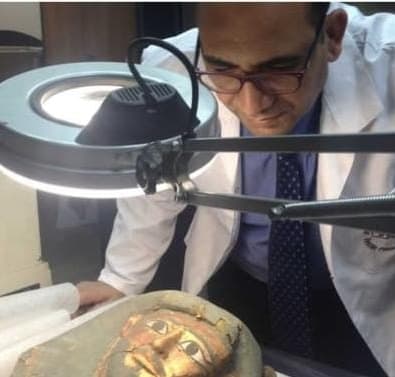
Prof. Dr. Saied Abdel Hamid Hassan
Chairman, Vitamera Heritage — Cultural Heritage Conservation Expert
A cultural heritage conservation expert with more than 30 years of experience across Egypt and much of the Middle East. He has led conservation departments at major museums and archaeological sites, trained restorers in the field on international projects, and taught restoration at several universities. What he brings is not theory but lessons from real sites: where mistakes happen, how heritage projects are run, and what project owners look for.
- years in heritage conservation
- +30years in heritage conservation
- historic icons documented & restored
- +1000historic icons documented & restored
- Fulbright Fellow — Getty Conservation Institute
- GettyFulbright Fellow — Getty Conservation Institute
- PhD in Restoration of Antiquities, First Class Honors — Cairo University
- General Director of Conservation & Restoration, Egyptian Ministry of Tourism and Antiquities; former General Director of Restoration at the Egyptian Museum and Greater Cairo museums
- Deputy Director & Lead Restoration Trainer, American Research Center in Egypt (ARCE) — trained restorers on the Khonsu Temple project, Karnak
- Assistant Professor / Lecturer of Restoration at Damietta, Zagazig, and Misr University for Science & Technology
- Member, American Institute for Conservation (AIC) and ICCROM
Certificate
A certificate of training completion is awarded per the provider's policy. It certifies program completion and is not a contractor accreditation or a license to practice restoration.
Our professional transparency
- Registration and qualification requirements vary by body and project and may change; always verify them on official portals before acting.
- Training does not guarantee vendor-list acceptance, passing qualification, or winning tenders.
- Undocumented experience, accreditations, or partnerships must not be presented in profiles or proposals.
- Specialized restoration work is subject to the project owner's requirements, specialists, and the necessary accreditations.
FAQ
Questions companies often ask us
Does the program guarantee my company's qualification or tender wins?
No. The program raises your readiness and prepares your files and decision tools, but qualification and award decisions belong to each competent body. We prefer to be clear about that from the start.
We have no heritage track record at all. Is this for us?
Yes — it was designed first for general contractors new to heritage. You'll learn to present transferable experience honestly, and when you need a specialist partner.
Can the program run for our company's team only?
Yes. A private program tailors cases and templates to your company's documents and team, producing a more detailed readiness plan.
Who from our company should attend?
Authorized representatives from senior management, business development, the technical office, tendering, registration, and compliance — the outputs touch these functions' decisions directly.
What about the confidentiality of our documents?
Only non-confidential legal and technical data is used in exercises, and privacy requirements and NDAs are agreed before any sensitive documents are reviewed.
Do you offer support after the training?
Yes — optionally and under a separate contract: profile preparation, registration support, unit setup, tender studies, and providing experts and technical supervisors.
Heritage opportunities don't wait for hesitant companies… start with a clear plan
Register your company's interest and our team will contact you to agree the best format: an upcoming group cohort, or a private program designed for your company.
- No financial commitment to register interest
- We contact you to agree the best format and timing
- The program can be fully tailored to your company
Training & Advisory Pathway: Qualifying Contractors to Enter Cultural Heritage Projects
Other programs for your company
For workers, technicians & team supervisors · Foundation
Heritage Site Safety & Protection
4 days (24 hrs): heritage-site hazards, PPE, protecting historic elements, and stop-and-report. Required before field applications in the Workmanship and Damage Prevention programs.
For workers, technicians & team supervisors · Foundation – Skills
Essential Workmanship & Traditional Materials
5 days (30 hrs): modern vs. heritage construction, historic materials, lime and mortar, tools and preparation, and quality and limits of authority — on training mock-ups.
For workers, technicians & team supervisors · Site Application
Preventing Construction Damage to Historic Buildings
3 days (18 hrs): common mistakes and their causes, temporary protection and site control, and coordination with the consultant, hold points, and handover.