
Your crew's safety comes first… and the historic building's safety matters just as much
Occupational Safety, Safe Work Practices & Heritage Protection
An applied professional pathway aimed primarily at workers, technicians, and team supervisors at general contracting companies not specialized in cultural heritage, who are assigned to carry out works inside historic buildings and sites. It focuses on safe-work behaviors, awareness of the sensitivity of original materials and elements, carrying out authorized tasks under specialist supervision, and stopping and reporting when hazards or archaeological elements are found. Staff at specialist firms also benefit from it as foundational or refresher training.
The pathway does not qualify trainees as accredited conservators or authorize independent treatment or structural decisions. Hands-on training takes place on mock-ups or approved sites after risk assessment and the necessary permits.
- 4 days
- 24 training hours
- Level: Foundation
- Hands-on in person + theory prep on the Vitamera platform
- training days
- 4training days
- training hours
- 24training hours
- practical topics
- 18practical topics
- hands-on practice & simulation
- 75%hands-on practice & simulation
The challenge
A heritage site isn't an ordinary construction site… and its hazards are different
- Scaffolding on sensitive walls, dust and vibration, chemicals, and tight access routes: hazards workers aren't trained for on ordinary sites.
- A worker who doesn't know exclusion zones or proper covering can damage an original floor or decoration in a moment.
- When they find a historic element or an unsafe situation, many workers carry on instead of stopping and reporting.
- A single incident on a historic site can mean a work stoppage and lost trust with the project owner.
What you'll walk away with
What will your crew do after the program?
- 1Spots hazardsIdentifies at least five hazards in a site scenario and proposes suitable controls.
- 2Uses the right protectionSelects and uses the right PPE for a given task, per instructions.
- 3Protects the historic elementCarries out protection steps for a historic element on a training mock-up without touching original fabric.
- 4Stops and reportsExplains when work must stop and the responsible supervisor be informed.
Who is this for?
Target groups & admission priority
General-contractor workers, helpers, technicians, craftspeople, and team supervisors assigned to heritage building and site projects.
Technicians and workers at specialist restoration firms who need standardized procedures and stronger protection and safety skills.
Groups are formed by trade:
- Civil works & finishes
- Stone & masonry
- Earth & lime works
- Carpentry
- Services & equipment
- Handling & storage
Curriculum
4 days that build safe-work behavior on a heritage site
Each day is 6 hours and ends with a hands-on exercise using photos, a simulated scene, or a non-historic mock-up. Theory prep is available on the Vitamera platform.
- 4 core sections
- 18 topics & activities
- 24 training hours
- 4 days
- Characteristics of a heritage site
- The worker's responsibilities
- Hazard recognition
- Personal protective equipment
- Site layout and access routes
Today's hands-on exercise: PPE inspection and hazard spotting from photos and a simulated scene
- Scaffolding and working at height
- Tools and electricity
- Dust and vibration
- Chemicals and safety data sheets
- Lifting and handling
Today's hands-on exercise: Pre-work inspection and an exercise selecting suitable tools and protection
- Protecting floors, decoration, and walls
- Barriers, covering, and exclusion zones
- Coordinating with the conservation team
- Reporting finds
Today's hands-on exercise: Installing temporary protection on a non-historic mock-up and writing an observation card
- Fire and evacuation
- First response
- Incident reporting
- Review of safe work procedures
Today's hands-on exercise: Emergency simulation, checklist, and practical test
How you learn
How does learning turn into practice inside your company?
- 01
Watch
Simple visual explanation, illustrated instruction cards, short videos, and documented Saudi cases.
- 02
Try on a mock-up
Exercises on material samples, panels, and mock-ups in a safe training area.
- 03
Do it under supervision
Carry out authorized tasks under specialist supervision.
- 04
Check
Bilingual checklists where needed to review quality and safety.
- 05
Document
Photo documentation and observation cards escalated to the responsible person.
Assessment & pass criteria
We measure on-site behavior… not memorization
| Tool | Weight | What we measure |
|---|---|---|
| Illustrated knowledge test | 20% | Understanding hazards and basic instructions |
| Practical performance observation | 60% | Following safety, protection, and quality steps |
| Participation & documentation | 20% | Commitment, reporting, and teamwork |
Proposed pass mark: 70% overall, with every critical safety point passed in the practical assessment; anyone missing a critical point is retrained. Minimum attendance 90%. Final criteria are confirmed with the delivering party.
Measuring impact
How does your company measure the return on training?
- Share of trainees passing the practical assessment and critical safety points
- Improvement in pre- vs. post-training knowledge test results
- Use rate of historic-element protection checklists in site simulations
- Contractor supervisors' rating of worker behavior after training, where agreed field follow-up exists
- Number of observations and hazards reported and corrected through the project's process
Your instructor
Learn from someone who has restored heritage by hand and led teams in the field
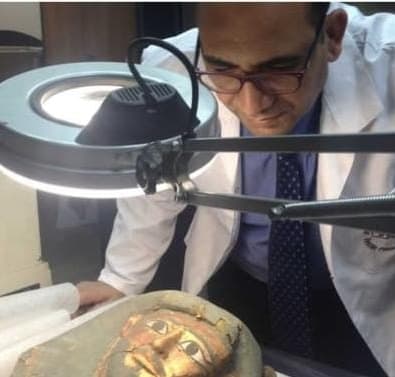
Prof. Dr. Saied Abdel Hamid Hassan
Chairman, Vitamera Heritage — Cultural Heritage Conservation Expert
A cultural heritage conservation expert with more than 30 years of experience across Egypt and much of the Middle East. He has led conservation departments at major museums and archaeological sites, trained restorers in the field on international projects, and taught restoration at several universities. What he brings is not theory but lessons from real sites: where mistakes happen, how heritage projects are run, and what project owners look for.
- years in heritage conservation
- +30years in heritage conservation
- historic icons documented & restored
- +1000historic icons documented & restored
- Fulbright Fellow — Getty Conservation Institute
- GettyFulbright Fellow — Getty Conservation Institute
- PhD in Restoration of Antiquities, First Class Honors — Cairo University
- General Director of Conservation & Restoration, Egyptian Ministry of Tourism and Antiquities; former General Director of Restoration at the Egyptian Museum and Greater Cairo museums
- Deputy Director & Lead Restoration Trainer, American Research Center in Egypt (ARCE) — trained restorers on the Khonsu Temple project, Karnak
- Assistant Professor / Lecturer of Restoration at Damietta, Zagazig, and Misr University for Science & Technology
- Member, American Institute for Conservation (AIC) and ICCROM
Certificate
Successful trainees receive a training completion certificate stating the program name, hours, and that attendance and assessment requirements were met. The program does not license independent restoration practice.
Our professional transparency
- The pathway does not qualify trainees as accredited conservators or authorize independent treatment or structural decisions.
- No work on original fabric, chemical trials, work at height, or hazardous equipment takes place without a risk assessment, permits, and independent specialist supervision.
- The balance of instruction and practice is adjusted to trainee level and risk.
FAQ
Questions companies often ask us
Why start with this program?
Because passing it is required before field applications in the Workmanship and Damage Prevention programs; it lays the foundation of safe work and heritage protection.
Our crew already had general safety training. What's new?
It adds what is specific to heritage sites: protecting floors, decoration, and walls, exclusion zones, coordinating with the conservation team, and reporting finds.
Is the training practical?
Yes — most of the time is demonstrations, exercises, and simulation: PPE checks, tool selection, installing temporary protection on a non-historic mock-up, and an emergency simulation.
Our workers speak different languages?
We rely on visual explanation, illustrated cards, and short videos, with bilingual checklists where needed.
How are trainees assessed?
An illustrated knowledge test (20%), practical performance observation (60%), and participation & documentation (20%). Pass mark 70% with every critical safety point passed.
Start with the foundation: a safe crew that protects the building
Register your company's interest, tell us how many workers and which trades, and our team will contact you to schedule the right cohort.
- No financial commitment to register interest
- We contact you to agree the best format and timing
- The program can be fully tailored to your company
Occupational Safety, Safe Work Practices & Heritage Protection
Other programs for your company
Corporate Program · Leadership & Technical Offices
Contractor Qualification for Heritage Projects
30 hours that take your company from understanding the restoration market to a 90-day entry plan: registration, a specialized profile, a heritage unit, and tender readiness.
For workers, technicians & team supervisors · Foundation – Skills
Essential Workmanship & Traditional Materials
5 days (30 hrs): modern vs. heritage construction, historic materials, lime and mortar, tools and preparation, and quality and limits of authority — on training mock-ups.
For workers, technicians & team supervisors · Site Application
Preventing Construction Damage to Historic Buildings
3 days (18 hrs): common mistakes and their causes, temporary protection and site control, and coordination with the consultant, hold points, and handover.