
Not every mix suits every wall… teach your crew the language of traditional materials
Essential Workmanship & Traditional Materials on Restoration Sites
An applied professional pathway aimed primarily at workers, technicians, and team supervisors at general contracting companies not specialized in cultural heritage, who are assigned to carry out works inside historic buildings and sites. It focuses on safe-work behaviors, awareness of the sensitivity of original materials and elements, carrying out authorized tasks under specialist supervision, and stopping and reporting when hazards or archaeological elements are found. Staff at specialist firms also benefit from it as foundational or refresher training.
The pathway does not qualify trainees as accredited conservators or authorize independent treatment or structural decisions. Hands-on training takes place on mock-ups or approved sites after risk assessment and the necessary permits.
- 5 days
- 30 training hours
- Level: Foundation – Skills
- Training on mock-ups and practical workshops
- training days
- 5training days
- training hours
- 30training hours
- practical topics
- 15practical topics
- hands-on practice & simulation
- 75%hands-on practice & simulation
The challenge
Your crew masters modern construction… but a historic building needs a different understanding
- An unapproved or incompatible mix can cause more damage than existed before the intervention.
- Workers treat historic buildings with modern-construction tools and habits.
- They can't tell original material from modern interventions, or read common deterioration.
- They don't know the limits of what they're allowed to do, or when to refer to the technical supervisor.
What you'll walk away with
What will your crew master?
- 1Reads work instructionsReads simplified work instructions and drawings before starting.
- 2Recognizes materialsRecognizes stone, brick, mud brick, timber, historic plaster, and common deterioration.
- 3Prepares the work areaPrepares appropriate hand tools and the work area, and handles and stores materials correctly.
- 4Works to the recipe and knows his limitsCarries out limited training tasks on mock-ups per approved recipes and procedures, knowing the limits of his authority.
Who is this for?
Target groups & admission priority
General-contractor workers, helpers, technicians, craftspeople, and team supervisors assigned to heritage building and site projects.
Technicians and workers at specialist restoration firms who need standardized procedures and stronger protection and safety skills.
Groups are formed by trade:
- Civil works & finishes
- Stone & masonry
- Earth & lime works
- Carpentry
- Services & equipment
- Handling & storage
Curriculum
5 days from modern construction to understanding historic materials
Each day is 6 hours and ends with a hands-on exercise on samples or mock-ups. Training is on mock-ups and workshops only unless technically pre-approved.
- 5 core sections
- 15 topics & activities
- 30 training hours
- 5 days
- Differences between modern and heritage construction
- Principles of minimum intervention
- Reading work instructions and drawings
Today's hands-on exercise: Distinguishing original materials from modern interventions using samples and photos
- Stone, brick, and mud brick
- Timber and historic plaster
- Common deterioration patterns
Today's hands-on exercise: Sorting samples and classifying deterioration without independent treatment diagnosis
- Lime and traditional mortar basics
- Material compatibility
- The dangers of unapproved mixes
Today's hands-on exercise: Preparing training samples under technical supervision per an approved recipe
- Using appropriate hand tools
- Cleanliness and preparation
- Material handling and storage
Today's hands-on exercise: Executing a mock-up section on a modern surface dedicated to training
- Basic quality control and work inspection
- Photo documentation
- The limits of a worker's authority
Today's hands-on exercise: Executing a trial task per work instructions and evaluating it
How you learn
How does learning turn into practice inside your company?
- 01
Watch
Simple visual explanation, illustrated instruction cards, short videos, and documented Saudi cases.
- 02
Try on a mock-up
Exercises on material samples, panels, and mock-ups in a safe training area.
- 03
Do it under supervision
Carry out authorized tasks under specialist supervision.
- 04
Check
Bilingual checklists where needed to review quality and safety.
- 05
Document
Photo documentation and observation cards escalated to the responsible person.
Assessment & pass criteria
We measure on-site behavior… not memorization
| Tool | Weight | What we measure |
|---|---|---|
| Illustrated knowledge test | 20% | Understanding hazards and basic instructions |
| Practical performance observation | 60% | Following safety, protection, and quality steps |
| Participation & documentation | 20% | Commitment, reporting, and teamwork |
Proposed pass mark: 70% overall, with every critical safety point passed in the practical assessment; anyone missing a critical point is retrained. Minimum attendance 90%. Final criteria are confirmed with the delivering party.
Measuring impact
How does your company measure the return on training?
- Share of trainees passing the practical assessment and critical safety points
- Improvement in pre- vs. post-training knowledge test results
- Use rate of historic-element protection checklists in site simulations
- Contractor supervisors' rating of worker behavior after training, where agreed field follow-up exists
- Number of observations and hazards reported and corrected through the project's process
Your instructor
Learn from someone who has restored heritage by hand and led teams in the field
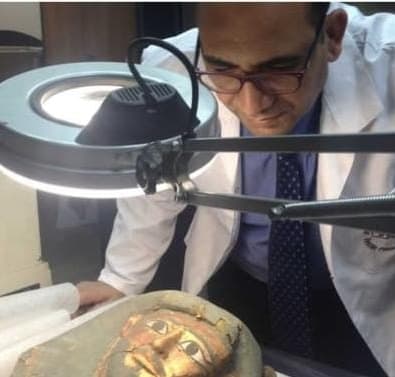
Prof. Dr. Saied Abdel Hamid Hassan
Chairman, Vitamera Heritage — Cultural Heritage Conservation Expert
A cultural heritage conservation expert with more than 30 years of experience across Egypt and much of the Middle East. He has led conservation departments at major museums and archaeological sites, trained restorers in the field on international projects, and taught restoration at several universities. What he brings is not theory but lessons from real sites: where mistakes happen, how heritage projects are run, and what project owners look for.
- years in heritage conservation
- +30years in heritage conservation
- historic icons documented & restored
- +1000historic icons documented & restored
- Fulbright Fellow — Getty Conservation Institute
- GettyFulbright Fellow — Getty Conservation Institute
- PhD in Restoration of Antiquities, First Class Honors — Cairo University
- General Director of Conservation & Restoration, Egyptian Ministry of Tourism and Antiquities; former General Director of Restoration at the Egyptian Museum and Greater Cairo museums
- Deputy Director & Lead Restoration Trainer, American Research Center in Egypt (ARCE) — trained restorers on the Khonsu Temple project, Karnak
- Assistant Professor / Lecturer of Restoration at Damietta, Zagazig, and Misr University for Science & Technology
- Member, American Institute for Conservation (AIC) and ICCROM
Certificate
Successful trainees receive a training completion certificate stating the program name, hours, and that attendance and assessment requirements were met. The program does not license independent restoration practice.
Our professional transparency
- The pathway does not qualify trainees as accredited conservators or authorize independent treatment or structural decisions.
- No work on original fabric, chemical trials, work at height, or hazardous equipment takes place without a risk assessment, permits, and independent specialist supervision.
- The balance of instruction and practice is adjusted to trainee level and risk.
FAQ
Questions companies often ask us
Must the crew have passed the safety program?
Yes — passing the Heritage Site Safety & Protection program is required before this program's field applications.
Do workers train on real historic buildings?
No — training uses samples, mock-ups, workshops, and modern surfaces dedicated to training, unless technically pre-approved.
Will workers learn to diagnose and treat damage?
They learn to recognize and classify common deterioration; diagnosis and treatment decisions remain with specialists.
Where do the mortar recipes come from?
Training samples are prepared under technical supervision per an approved recipe, and workers learn the dangers of unapproved mixes.
How are trainees assessed?
An illustrated knowledge test (20%), practical performance observation (60%), and participation & documentation (20%), plus a trial task on the final day.
Hands that understand the material… don't damage it
Register your company's interest, tell us how many workers and which trades, and our team will contact you to plan the right cohort.
- No financial commitment to register interest
- We contact you to agree the best format and timing
- The program can be fully tailored to your company
Essential Workmanship & Traditional Materials on Restoration Sites
Other programs for your company
Corporate Program · Leadership & Technical Offices
Contractor Qualification for Heritage Projects
30 hours that take your company from understanding the restoration market to a 90-day entry plan: registration, a specialized profile, a heritage unit, and tender readiness.
For workers, technicians & team supervisors · Foundation
Heritage Site Safety & Protection
4 days (24 hrs): heritage-site hazards, PPE, protecting historic elements, and stop-and-report. Required before field applications in the Workmanship and Damage Prevention programs.
For workers, technicians & team supervisors · Site Application
Preventing Construction Damage to Historic Buildings
3 days (18 hrs): common mistakes and their causes, temporary protection and site control, and coordination with the consultant, hold points, and handover.